BRIAN THE BRUSH, LEEDS

After spending his teenage years at art college Brian’s career took him straight on to undertake a long apprenticeship in the art of traditional signwriting and goldleaf gilding.


During his time as an apprentice in Bradford, West Yorkshire, Brian was privileged to work alongside (and learn from) highly skilled artisans in all of the arts and crafts associated with signwriting and gilding, including reverse glass gilding and architectural gilding. His teachers were, by anyone’s standards, amongst the best in the signage business of that era. He still has the utmost respect for, and very fond memories of, the people who taught him his skills many years ago.


Over the next decade Brian (who had by then become known locally as ‘Brian the Brush’ due to his expertise with the signwriter’s brushes!) decided to start up his own business. What else could he call it, other than BRIAN THE BRUSH?


His business rapidly grew and he gained an excellent reputation in his field, initially concentrating just on the Yorkshire area, but eventually gaining a nationwide reputation as one of the country’s finest traditional signwriters and gilders and work took him and his team all over the United Kingdom.


Over the four decades Brian has watched signage ‘fads’ come and go, but the traditional skills he owns and values have never really died and there is actually a huge surge in the demand for traditional signage now. Consequently, we are as busy as we’ve ever been! Brian and his team still travel nationwide creating superb signage and gilding projects for trade and public alike; only now Brian the Brush has over forty years worth of expertise to call upon and he has, quite rightly, earned the same respect from his students as he gave to his own mentors when he was a youth. Whilst Brian is more than happy to offer a vinyl service if a client prefers this , he is is proud to be a true artisan of the ‘old school’ traditional skills and values associated with hand signwriting and goldleaf gilding.


In summary, Brian the Brush Ltd is a family run business led by a man with outstanding artistic ability and a team packed with enthusiasm for the art of traditional signage and gilding.


Unlike some companies offering hand painted signage, Brian the Brush is a GENUINE time-served traditional signwriter and gilder, and also something of an original and one-off himself!


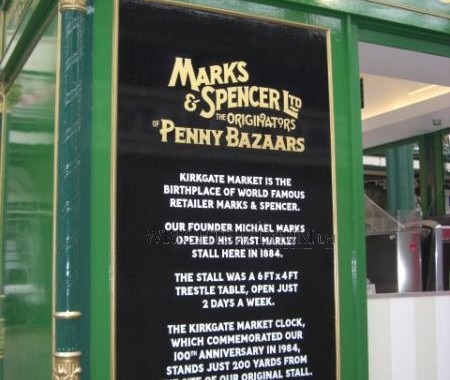
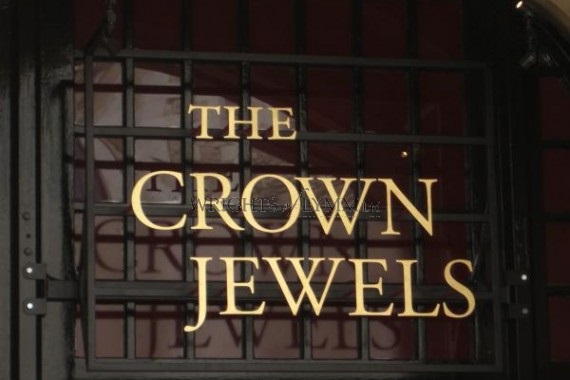
watermarkMarks-spencer-leeds watermarkThe-crown-jewels-570x380

Reproducing Louis XV by Glen Beckford Frames

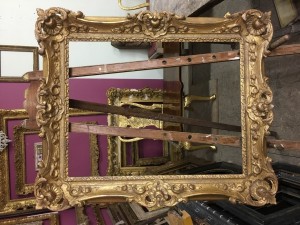
We at Glen Beckford Frames were asked by a very prestigious client of ours to reproduce a sample of a Louis XV frame for a painting by a prominent French artist. Louis XV frames are exquisitely carved and gilded picture frames from the period 1723-1774. They have highly decorated and strong corners with empty plain spaces of moulding to give balance to the frame. The panels are sanded and the gesso recut to give even more detail. The top rails are swept and consist of many S and C scrolls along with loops in the corners.
watermark1t

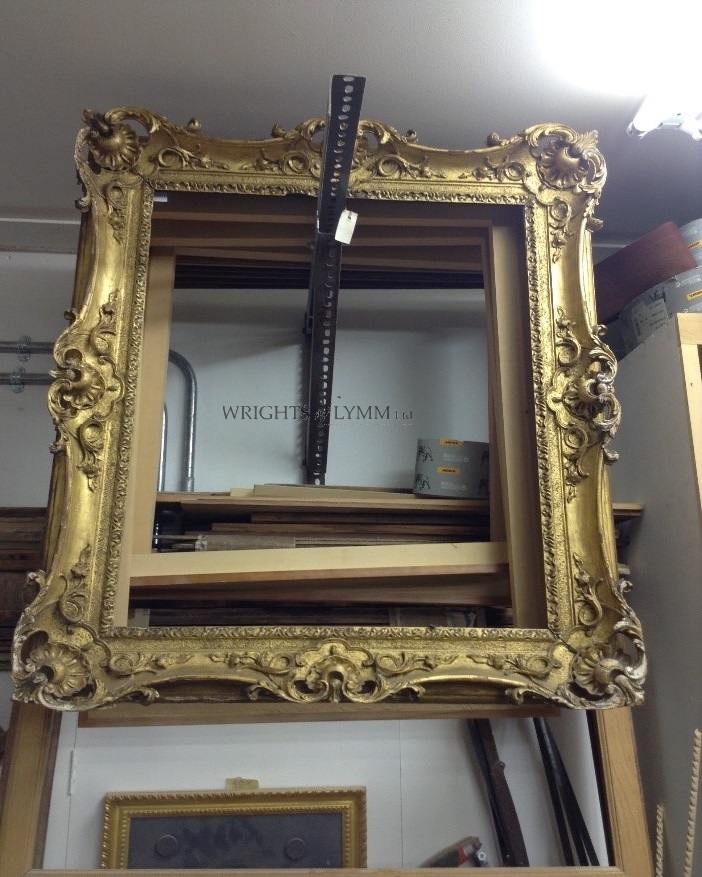
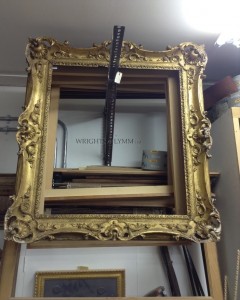
Figure 1: Sample of Louis XV Frame


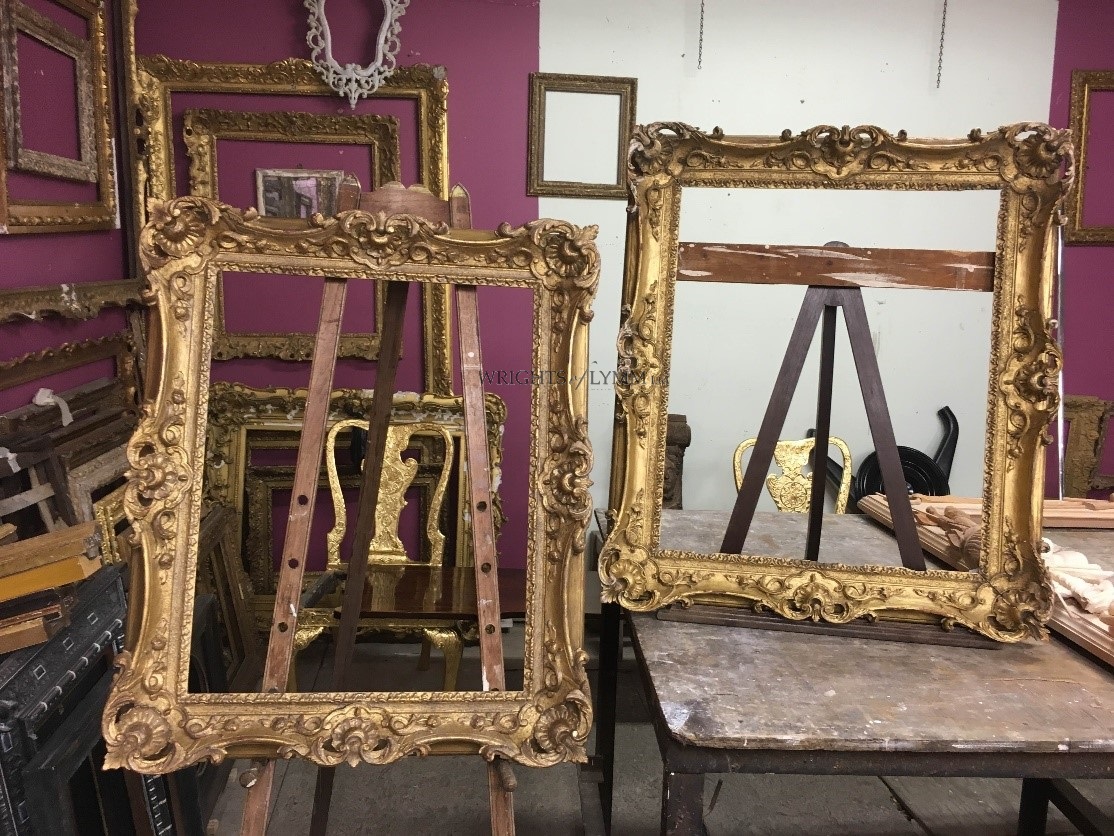
Here in Figure 1 we can see the sample of the frame that was requested for us to reproduce. The sample is in reasonable condition and was previously oil gilded, however, we were asked to water gild the reproduction.


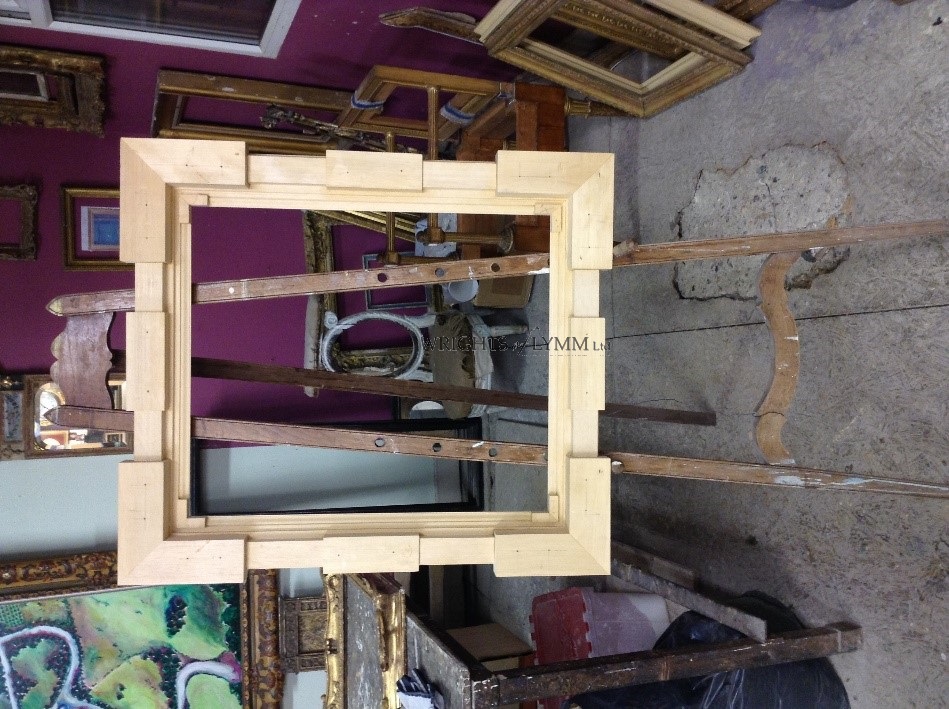
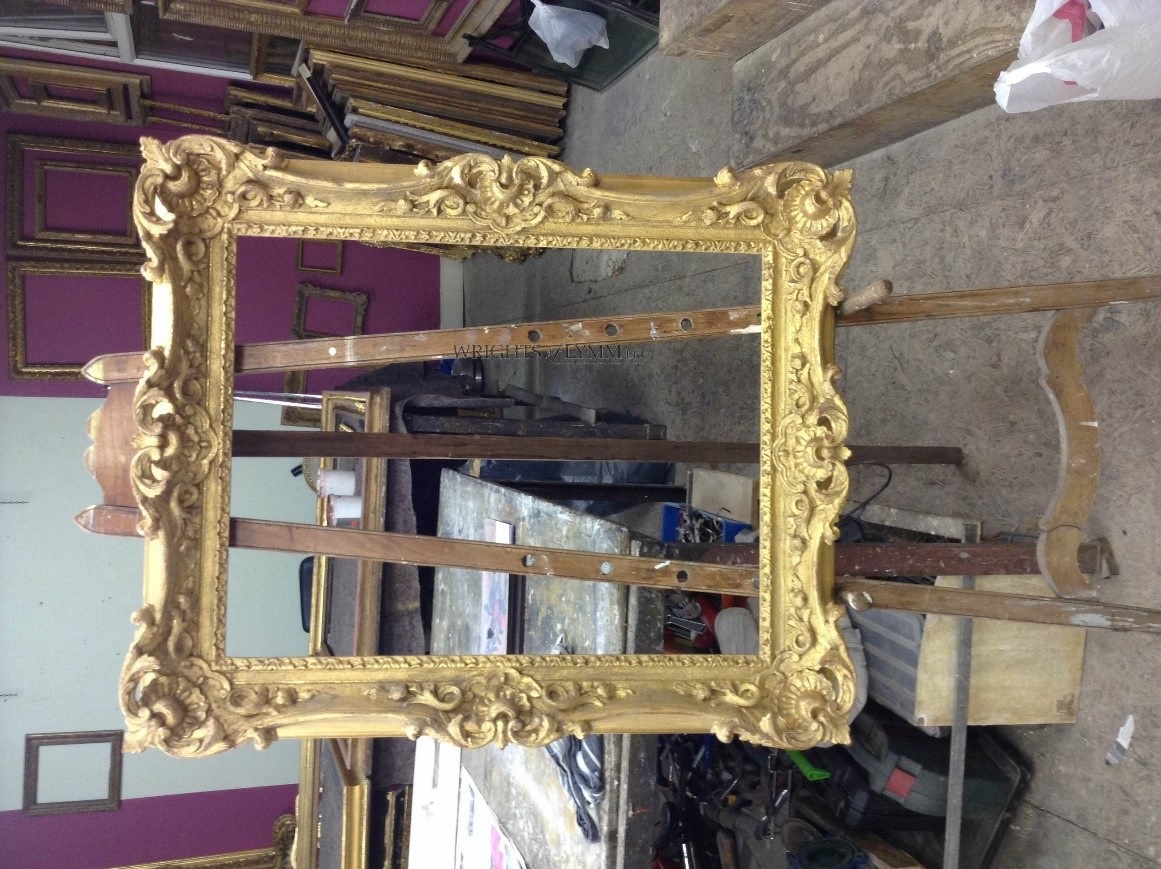
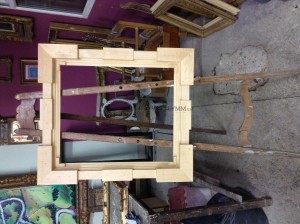
The first stage is to have the frame put together in the wood in order for it to be carved (Figure 2). At this stage the mouldings are made in lengths of wood, cut and mitred to the correct size, keyed and glued together. Additional wood is added to the centres and corners of the frame to replicate what the finished frame will look like after it has been carved.
 

watermark2

Figure 2: Frame in Wood to be Carved


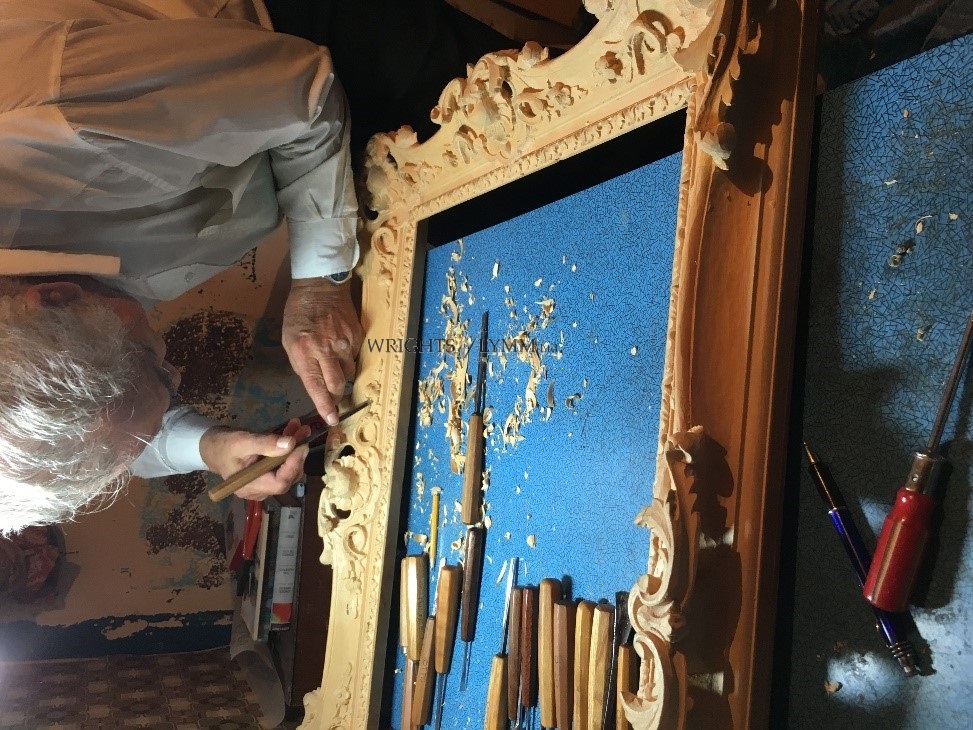
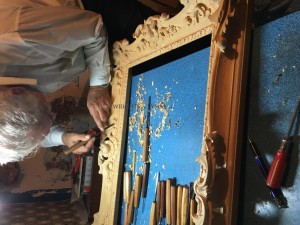
Next the frame is hand-carved by specialist carvers in true Louis XV style to replicate the sample frame (Figure 3). Frames can also be machine carved, however, in all our 40 years of business we have always hand-carved our frames as this gives the frame a better quality and its unique individual identity.
 

watermark3


Figure 3: Frame being Carved by Specialist Carver


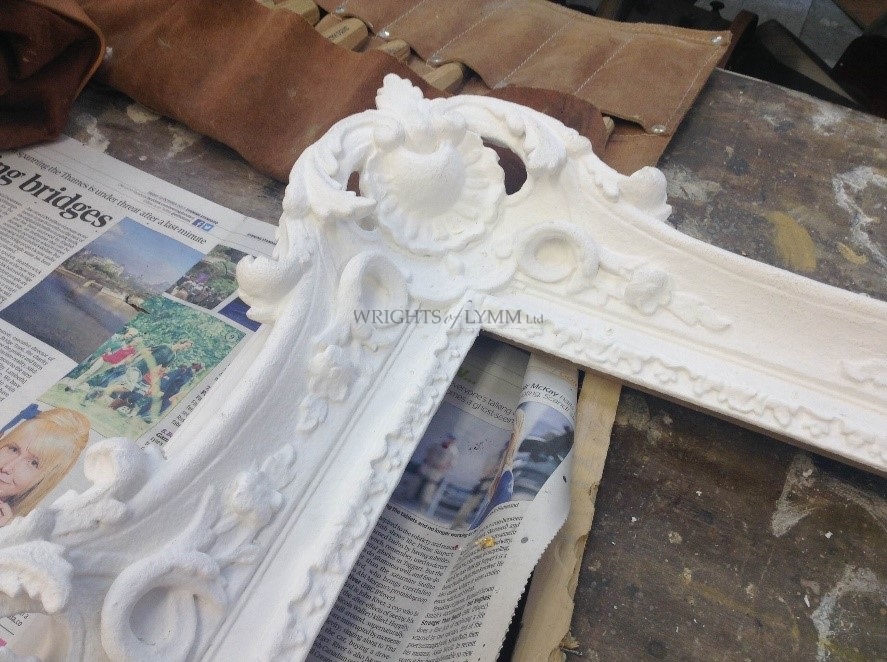
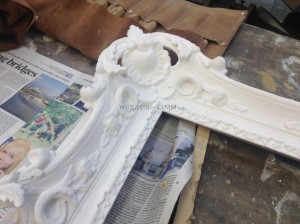
Once the frame has been delicately carved it is sanded with different grades of sand paper until it is smooth. It is after this that we apply boiling hot size which is then left to dry. The purpose of the boiling hot size is to seep into the wood and seal the frame. After the frame is dry which can take up to 24 hours, the frame is now ready to be gessoed. Anywhere between five to fifteen coats of gesso will then be applied depending on the type of frame. After the frame has been gessoed it is left bright white in appearance (Figure 4). At this stage the frame is again left to dry between each application of gesso. When dry the frame is again sanded with different grades of sand paper to give a smooth finish. However, even after this the frame has to go through a process called ‘wet and dry’ whereby the gessoed frame is wet with water and sand papered to give an even smoother finish. Once dry the frame is again sand papered with very fine grade sand paper to give an extra smooth finish.
 

watermark4

Figure 4: Frame in Gesso


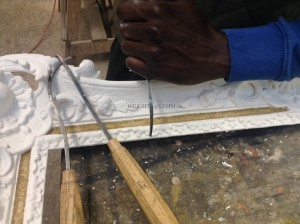
Now that the frame has been gessoed and is also very smooth in appearance and touch the flat panels are sanded in true Louis XV style. Sanding the panels is done by applying a mixture of gesso, white glue and water to the panels and sprinkling sand onto the section while the mixture is still wet. This is then left to dry and the loose sand removed. Next is the process


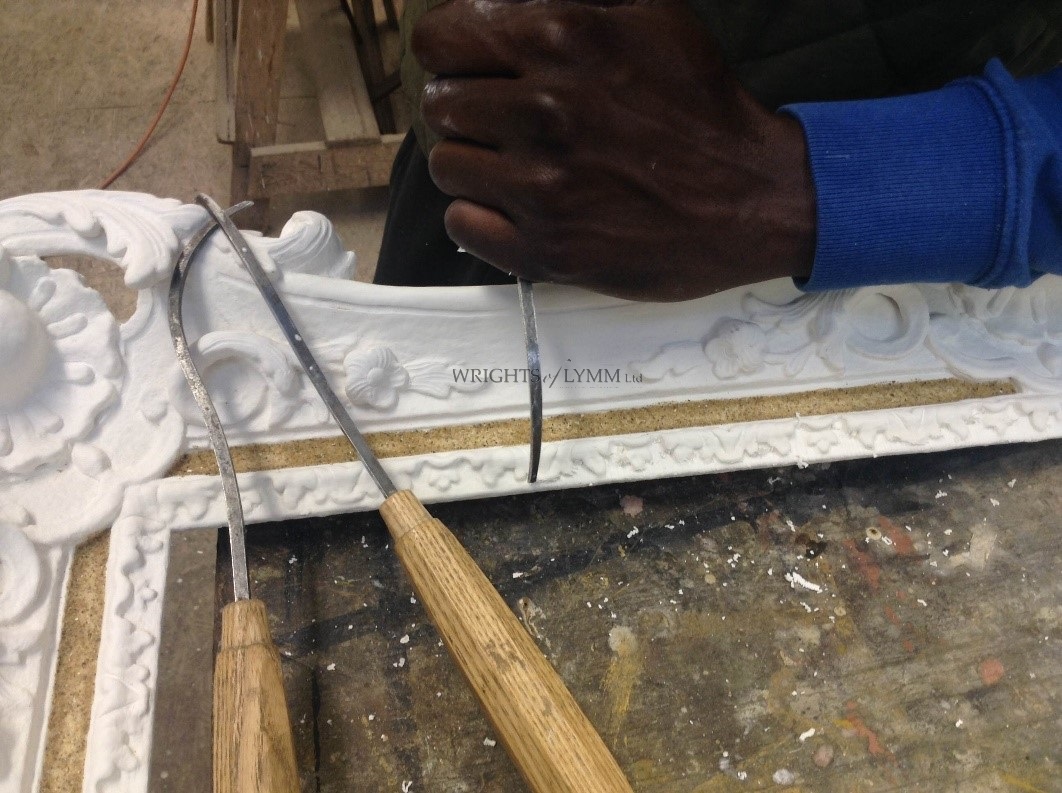
which is very critical in bringing character and intricacy to the frame. This process is where special re-cutting chisels are used to add extra detail and decoration to the frame. The gesso is re-cut mainly along the carvings and also on the front edge of the frame (Figure 5).


The difference in detail between Figure 4 and Figure 5 is very noticeable as the scrolls, flowers, leaves and shields are brought to life by the added detail.
 

watermark5

Figure 5: Sanded panels & Re-cutting of gesso


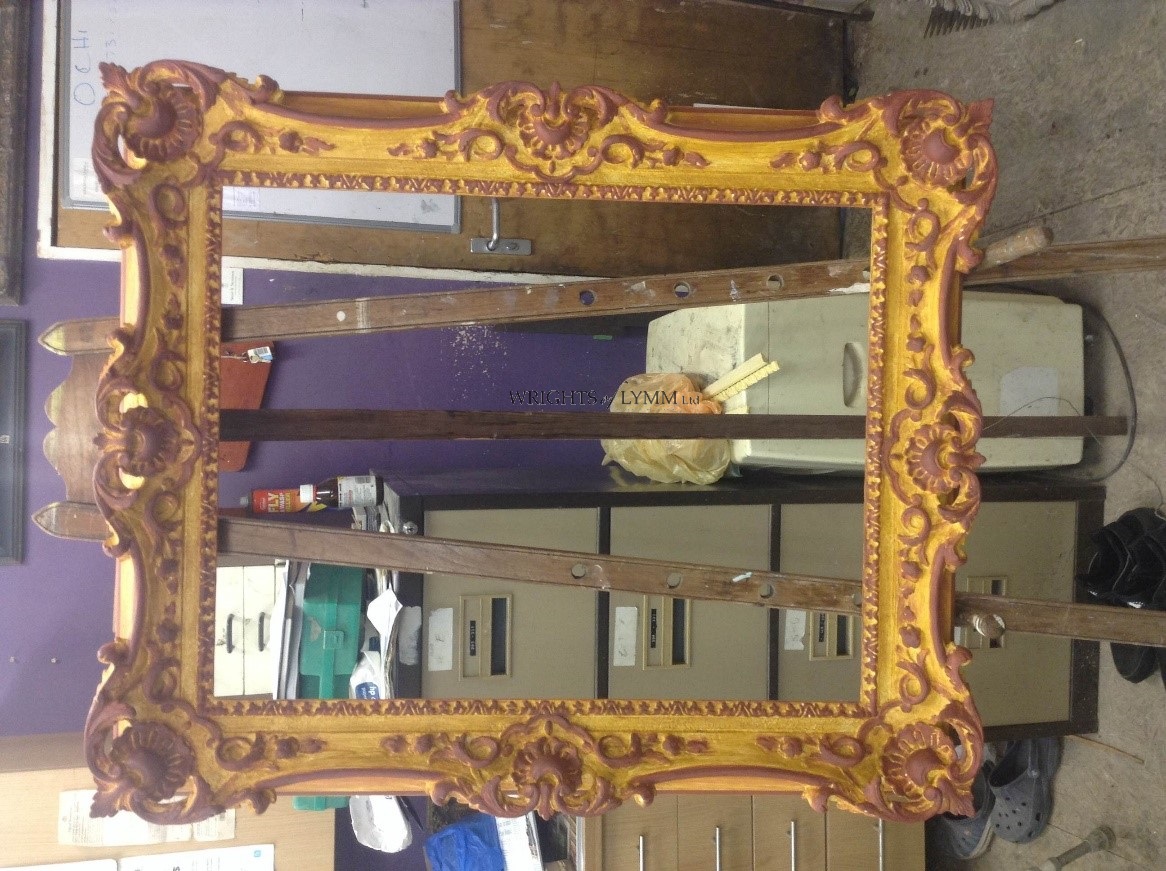
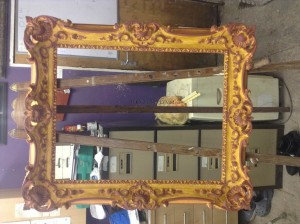
Now that the frame has been re-cut, gesso is then put onto the sanded panel and left to dry for the next stage which is applying a mixture of size and yellow ochre clay.  After that has been done a mixture of red clay and size is then added on top of the yellow ochre. The red clay is coloured to a specific shade of red to complement the painting. This is important when it comes to toning the frame to ensure that the colours resonating through the gold supplement the painting within the frame.
 

watermark6


Figure 6: Red Clay on top of Yellow Ochre


At Glen Beckford Frames we believe that a frame should be able to be hung on the wall before it has been gilded and still look great. As Figure 6 shows, this frame would look great hung on the wall with the painting within.


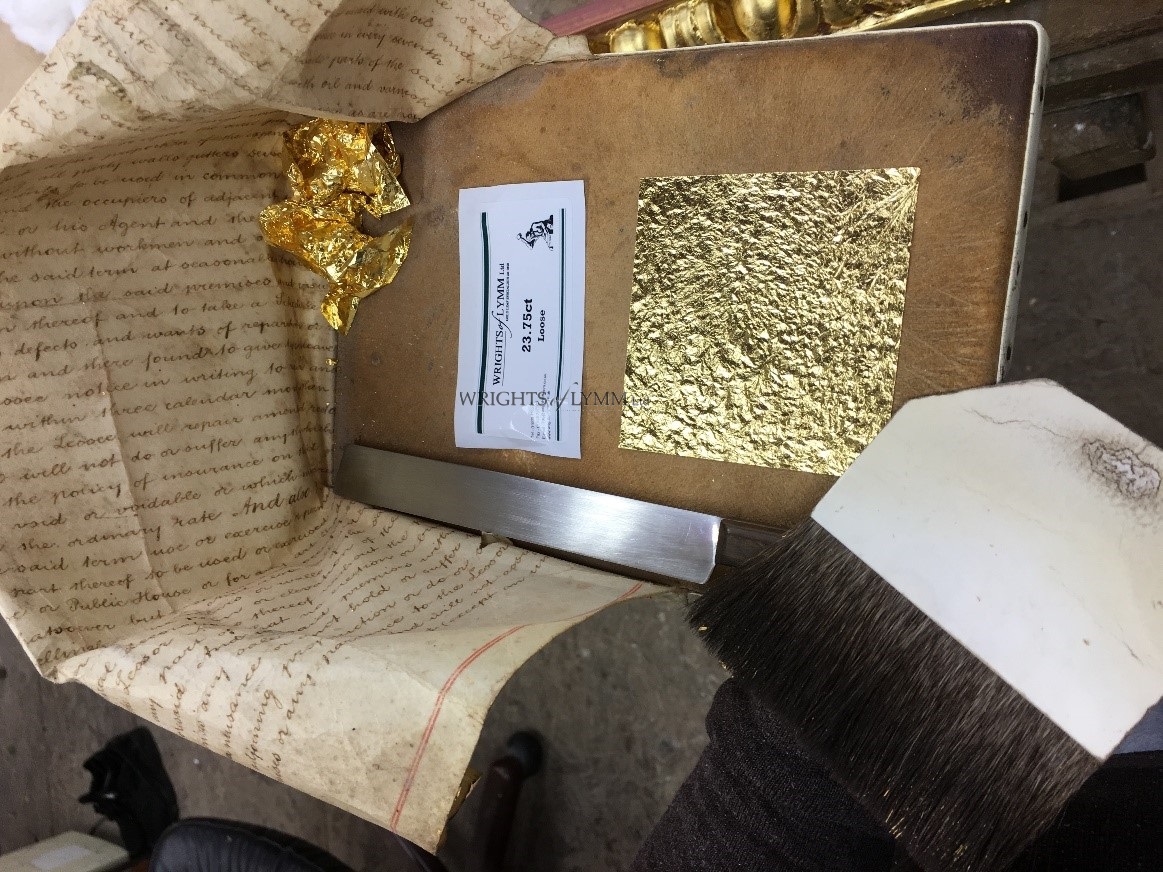
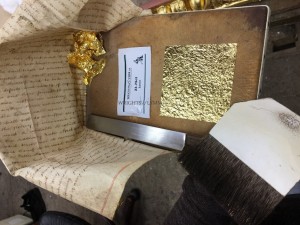
It is at this stage that the frame is ready to be gilded. The frame is water gilded using 23.75ct loose gold leaf as can be seen in Figure 7.
 

watermark7

Figure 7: Gilding Cushion with Gold Leaf

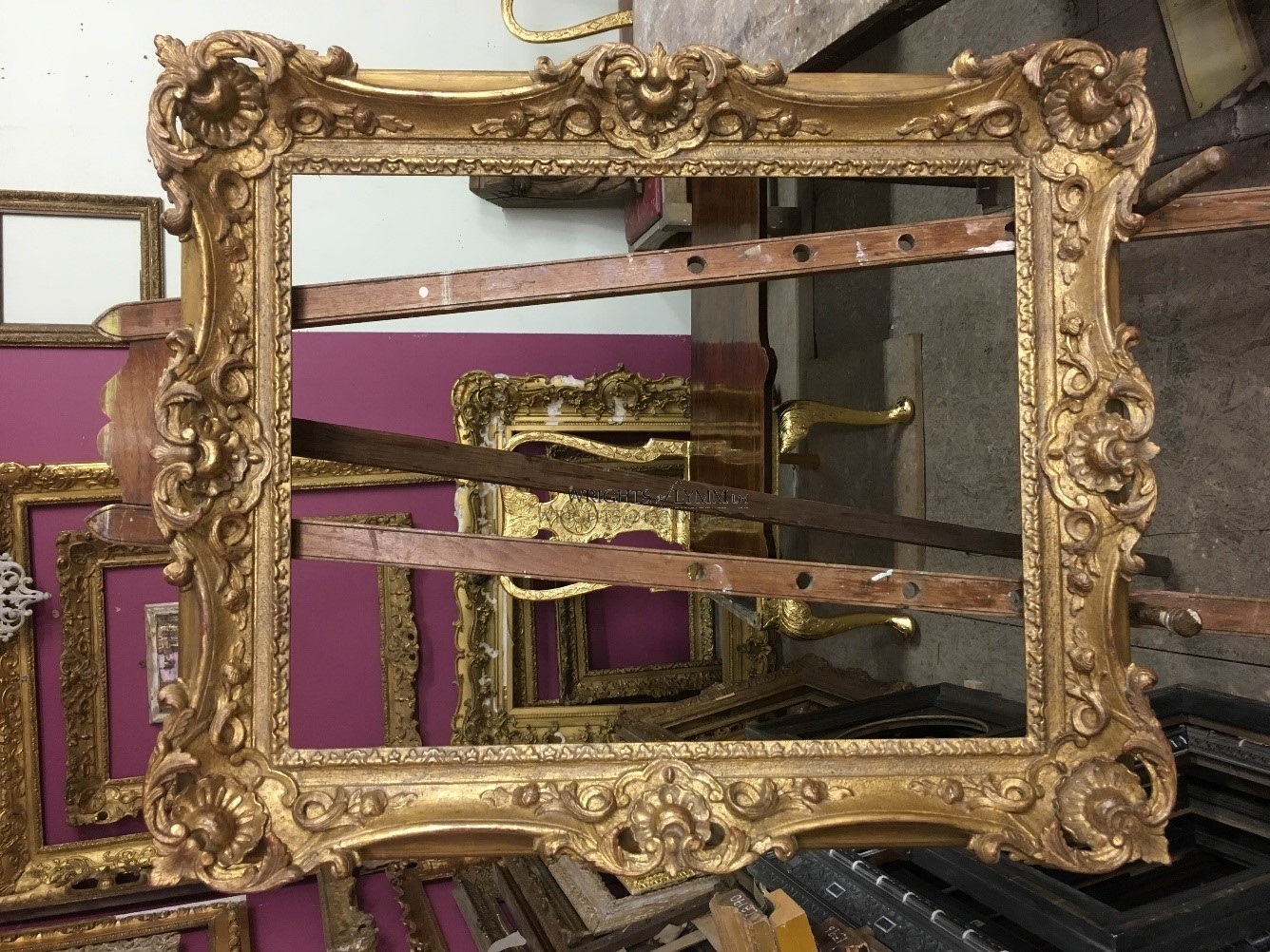
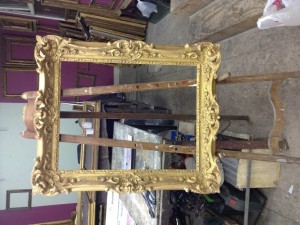
Once the frame is completely gilded it is then burnished with a burnishing stone and toned. In Figure 8 we can see the frame after it has been gilded, burnished and slightly toned.
watermark8

Figure 8: Frame Fully Gilded and Slightly Toned


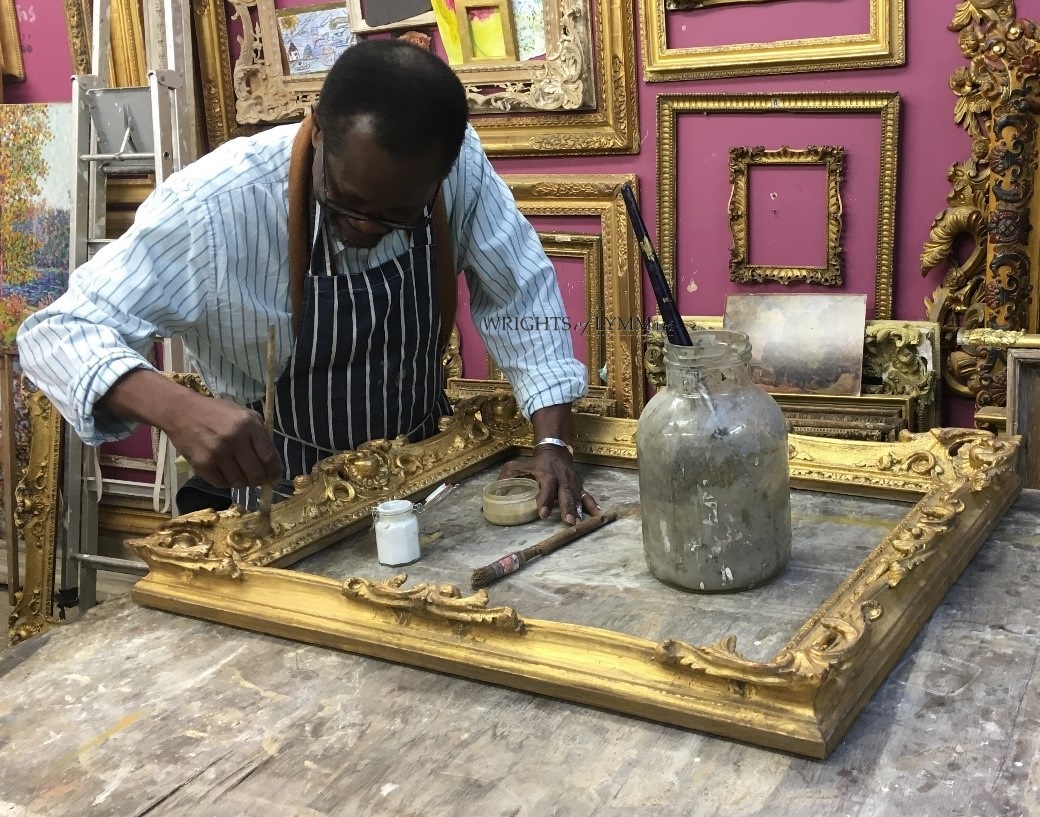
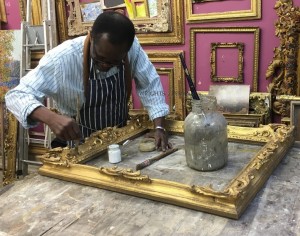
The frame is then toned to complement the painting or sometimes to match a sample. In Figure 9 we can see Glen Beckford in the process of toning the frame to match the sample.
 

watermark9

Figure 9: Glen Beckford Toning the Frame


Figure 10 shows the completed frame. The colours of the clay can be seen coming through the gold with the toning making the frame look antiqued and toned.


Figure 10: Completed Frame
 

watermark10

So here we have the completed frame alongside the sample provided. In this case the client asked for the reproduction to have more weight than the sample, hence why it looks slightly bolder than the sample

.watermark11
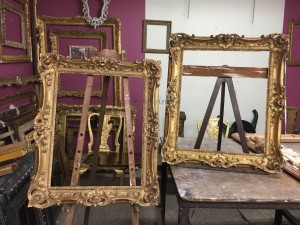
 

Figure 11: Completed Frame Alongside Sample
 

watermark12

23.5ct Loose & Transfer Gold Leaf, Seconds

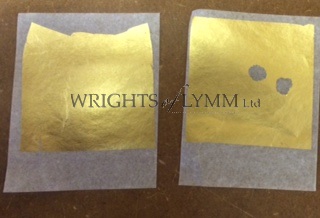
Whilst stocks last, we have some seconds of 23.5ct Loose and Transfer Gold Leaf, 80mm x 80mm, 25 Leaves per book. The leaves are slightly imperfect as per the photograph below and are going for an incredible price of just £9.35 for the loose leaf and £9.95 for the transfer leaf.  Order on our website today by finding them under “Special Offers” or by calling 01925 752226

watermarkSeconds-Transfer

Janusz Chyrowski, London

Janusz Chyrowski gilder, master craftsman, Continues the family tradition in gilding craft.  Started in 1987 as an apprentice in his father’s gilding, carving & restoration workshop. In 1997 diplomed as a Master of Gilding Craft.1999-2005 head of examiners in gilding craft for journeymen and masters at The Lower Silesian Chamber of Crafts in Wroclaw, Poland.  Since 2005 based in London UK.  Works  freelance for bespoke furniture makers, fine picture restorers & framers, antique & art dealers, galleries & museums, interior designers, architects and private collectors worldwide.


 Janusz Chyrowski Gilder – Restorer” is a fully licensed and insured practice in the UK.


Member of “The Guild of Master Craftsmen” in the UK and “Society of Gilders” in the US.


He is promoting gilding as a craft, not just as a skill, is teaching and explaining the original gilding techniques, methods and the history of craft. Giving gilding classes, advise and expertise.


TITIAN STUDIO, LONDON

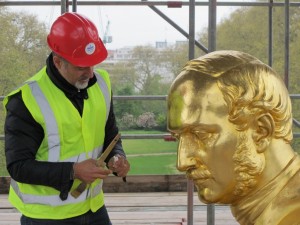
We have had the pleasure of working with Rod, Madeline and the team at Titian Studio for a number of years, supplying them with Gold Leaf for some remarkable gilding projects.  The gilding and decorating of large and medium scale projects remains an important part of their business. They employ the best techniques and craftspeople to work on a 20 foot coffered ceiling, as they would a Thomas Sheraton cabinet or a set of Robert Adam dining chairs. Titian has worked on large scale historically important projects, such as the restoration of the gilding of the Prince Albert memorial, as well as slick contemporary interiors. Titian Studio can emulate and produce Chinese wall paper in the Chinoiserie style for interior salons or adorn walls with our specialist crackled gesso and silver leaf gilded effect.


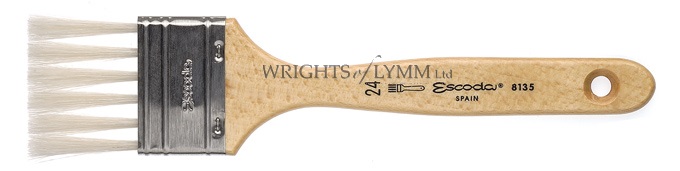
ESCODA PIPE OVERGRAINER, LOCK SQUARE EDGE

Wrights of Lymm Ltd are proud to stock some of the finest quality brushes made by Escoda in Spain.  We are now stocking their Pipe Overgrainers.  An Overgrainer is used to create the shaped heart grain found in hardwoods such as mahogany, maple, and walnut. These brushes are available in No.21, N.24, No.27 and No.30 and can be find in the faux finish brushes section of our website. Escoda specially cures each brush for outstanding resiliency and have a great reputation. in the brush world


watermark8135

KEN PITHOUSE, MODEL MAKER

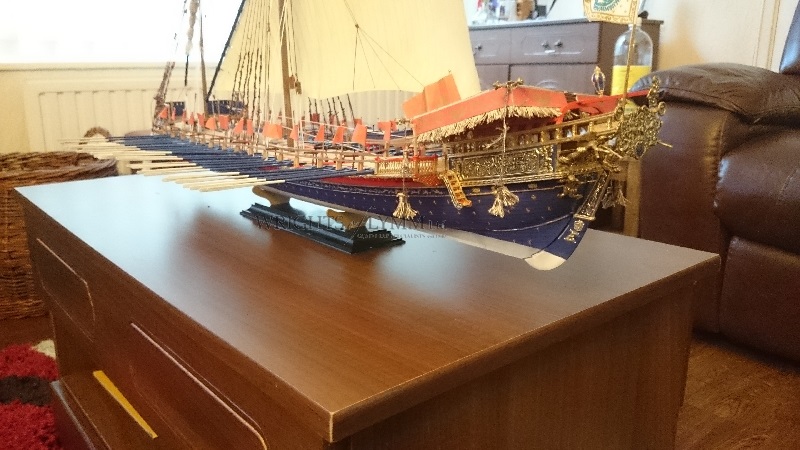
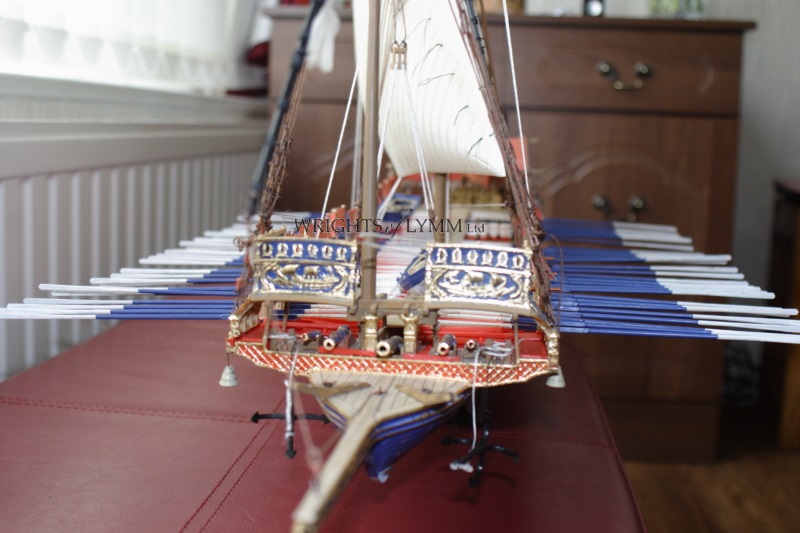
Ken Pithouse, a customer of Wrights of Lymm has always painted his models with gold paint where required but has never been happy with the results(the gold never really hardens and goes black wherever you’ve handled it).  He bought Hellers 1/76 La Reale De France and since it had so much gold on it he thought how can I get a better finish, then it hit him to use real gold. Ken has been a member on several modelling forums and never seen real gold used before so wondered if it would work, well judging from the response on all the forums I think a lot of people will be doing this in the future  Here are some photos of the La Reale(she was Louis the iiiv royal galley)  The second ship is the Royal Sovriegn (nearly bankrupted king Charles, he bought out the ships tax)

watermarkBoat-1 watermarkBoat-2

NOVEMBER SPECIAL OFFER

For month of November receive 5% discount on all Polyvine Products, quoting POLY5 at checkout

watermark68795db2e184cb9433df641069135abb-279x300