Always good for us to see how our gold leaf is used!
Thanks to @annierack.nc30 for tagging us in this, be sure to check out her page to see more of her talented work!
Always good for us to see how our gold leaf is used!
Thanks to @annierack.nc30 for tagging us in this, be sure to check out her page to see more of her talented work!
Great work by @charleys_chalk Be sure to check out their page for more of there talented work!!
“A massive congratulations to Jess @pivotpolestudio on opening her new space and a big thank you for having me back to add new signage ✨ Hand painted in @wrightsoflymm own gold paint”
Great work by @mrdabski never fails to impress! Be sure to check out their page!!
“All finished up and framed for @zim_tta , water gilded with @ashandover and @wrightsoflymm 23.5 carat gold leaf and 12 carat white gold , variegated copper leaf and gold border hand painted lines with @1shotpaints and Abalone inserts”
Gold leaf has a rich history that dates back to ancient civilisations. From the Egyptians to the Romans, gold leaf was highly prized and associated with wealth, power, and divinity. The shimmering gold surface captured the imagination of artists and craftsmen throughout the centuries, leading to its extensive use in religious and ceremonial art, as well as in architectural ornamentation.
Beyond its historical significance, the gold leaf also carries symbolic meaning. It represents abundance, enlightenment, and the pursuit of perfection. Its radiant glow brings warmth and positive energy to any space, creating a sense of harmony and prosperity. By incorporating gold leaf into your interior design, you are not only adding a touch of luxury but also infusing your space with deep-rooted symbolism.
Gold leaf comes in various types, each with its own unique characteristics and uses in interior design. The most common types are genuine gold leaf, composition gold leaf, and imitation gold leaf.
Genuine gold leaf is made from pure gold and is available in different karat weights, such as 22-karat and 23-karat. It is the most expensive type of gold leaf but offers the highest level of authenticity and durability. Genuine gold leaf is commonly used for gilding furniture, mirrors, and architectural details.
Composition gold leaf, also known as ‘patent’ or ‘dutch’ gold leaf, is made by combining a thin layer of gold with other metals. It is more affordable than a genuine gold leaf but still boasts a beautiful gold appearance. Composition gold leaf is often used for gilding frames, decorative objects, and interior accents.
Imitation gold leaf, also called ‘schlagmetal’ or ‘metal leaf,’ is made from alloys that mimic the appearance of gold. It is the most economical option and is commonly used for large-scale gilding projects or where authenticity is not a primary concern.
Applying gold leaf requires skill and precision to achieve a flawless and professional finish. There are several techniques and considerations to keep in mind when working with gold leaf.
One popular technique is water gilding, which involves applying gold leaf to a surface that has been prepared with a layer of gesso and bole. The gold leaf is then adhered using a water-based adhesive, allowing for a smooth and seamless application. Water gilding is commonly used for intricate and detailed gilding projects, such as ornate picture frames or decorative mouldings.
Another technique is oil gilding, which involves using an oil-based size as the adhesive. Oil gilding is often chosen for outdoor applications or surfaces that require a more durable finish. It provides a rich and vibrant appearance, making it ideal for gilding signs, sculptures, and architectural elements.
Before applying gold leaf, it is essential to prepare the surface properly. This includes ensuring it is clean, smooth, and free of any dust or debris. It is also crucial to handle gold leaf with care, as it is incredibly delicate and can easily tear or wrinkle. By following these techniques and considerations, you can achieve stunning results when working with gold leaf.
Gold leaf accents have the power to transform any space, adding a touch of elegance and luxury. There are numerous ways to incorporate gold leaf into your interior design, depending on your personal style and the desired aesthetic. Here are a few ideas to inspire you:
Accent walls – Create a focal point in a room by applying gold leaf to a wall. Whether in a geometric pattern or a free-flowing design, the shimmering gold surface will instantly elevate the ambience.
Ceiling details – Add a touch of grandeur to your space by gilding the ceiling. Whether it’s a simple border or an elaborate design, a gold leaf ceiling will create a sense of height and sophistication.
Furniture embellishments – Transform plain furniture into statement pieces by gilding the edges, legs, or decorative details. A touch of gold leaf can turn an ordinary piece into a luxurious heirloom.
Light fixtures – Replace ordinary lampshades or light fixtures with ones adorned with gold leaf. The golden glow will cast a warm and inviting ambience, creating a cosy and opulent atmosphere.
Remember, when incorporating gold leaf accents, it’s important to strike a balance. Too much gold leaf can overpower a space, while too little may not make the desired impact. By carefully choosing the right elements and placements, you can achieve a harmonious and visually stunning result.
To ensure the longevity and beauty of your gold leaf finishes, it is essential to provide proper maintenance and care. While gold leaf is a durable material, it is still susceptible to damage if not handled with care. Here are some tips for maintaining your gold leaf finishes:
Dust regularly – Use a soft, lint-free cloth to gently dust your gold leaf surfaces. Avoid using abrasive materials or harsh cleaners, as they can scratch or tarnish the delicate surface.
Avoid direct sunlight – Prolonged exposure to direct sunlight can cause the gold leaf to fade or become discoloured. Consider using window treatments or UV-protective films to shield your gold leaf finishes from harmful UV rays.
Protect from moisture – Moisture can tarnish and damage gold leaf. Avoid placing objects with wet surfaces directly on gold leaf surfaces, and wipe up any spills immediately.
Handle with care – When cleaning or moving items with gold leaf, handle them with care to avoid scratching or damaging the delicate surface. Use soft gloves or a cloth to protect the gold leaf from oils and fingerprints.
By following these maintenance tips, you can preserve the beauty and shine of your gold leaf finishes for years to come.
Gold leaf is a material that has stood the test of time, captivating the hearts of artists, designers, and homeowners alike. Its shimmering beauty, rich history, and symbolic meaning make it a truly timeless choice for interior design. Whether used sparingly as an accent or embraced boldly throughout a space, gold leaf has the power to transform any room into a haven of elegance and sophistication.
So, why not embrace the allure of gold leaf in your own home? Whether you choose to incorporate it through wall treatments, furniture accents, or decorative objects, the gilded elegance of gold leaf will undoubtedly add a touch of luxury and opulence to your interior design.
Discover the endless possibilities and let the timeless beauty of gold leaf shine in your home.
Click here to explore our exquisite collection of gold leaf finishes and start your journey towards creating a space that radiates with gilded elegance.
What an amazing cake by @pontycarlocakes never fails to impress with her cakes! Be sure to check out their page!!
“wedding set up at @llechwenhall for our lovely niece Rachel and husband Dave. I thoroughly enjoyed making everything and had total free range in the design which was a little bit scary. Tiers of strawberry and champagne, lemon drizzle and chocolate and salted caramel with vanilla bean and raspberry curd macarons and vanilla bean Personanlised cookies.
Venue- @llechwenhall
Cake prop from @prop.options
Wafer paper from @saracinodolci
Personalised cookie impression message from @lasercupboard
Flowers made with @squireskitchen flower paste.
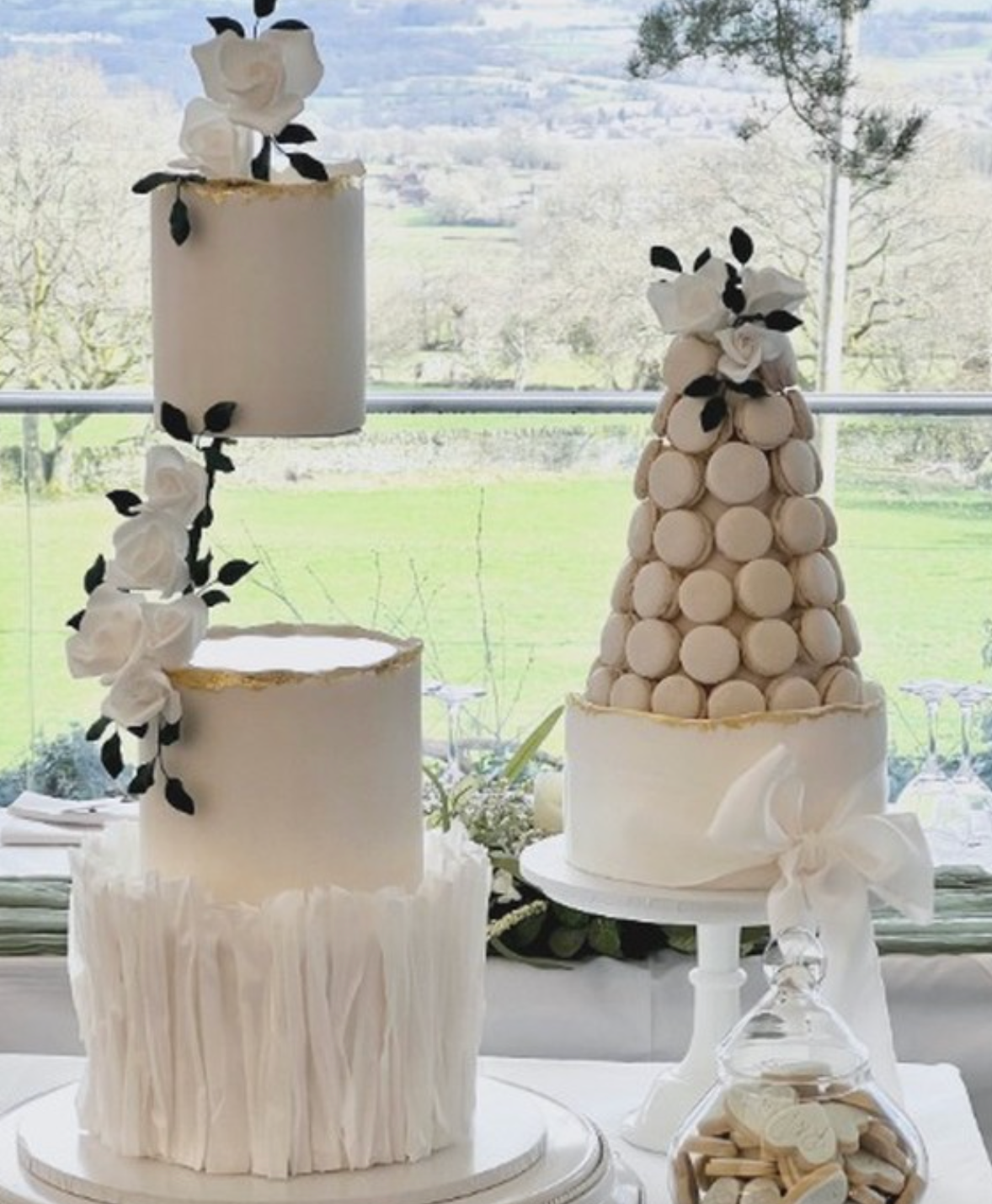
Ponty Carlo Cakes
Gold leaf from @wrightsoflymm”
✨✨APRIL SPECIAL OFFER✨✨
20% off all starter kits, enter code KIT20 at checkout! Find the link in our bio to get yours!!
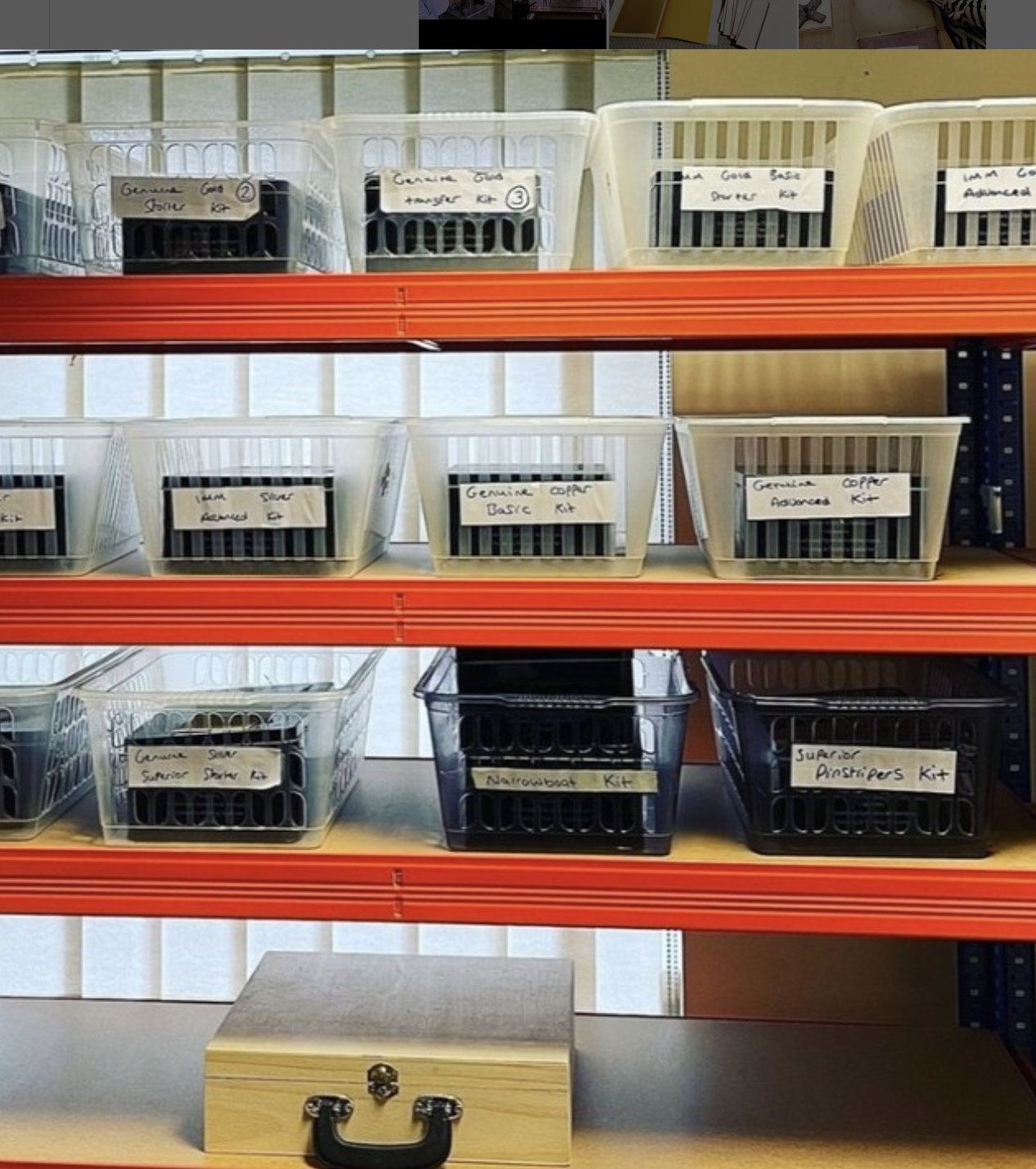
starter kits
Great work by @kustomkerb_designs be sure to check our their page to see more of their talented work!!
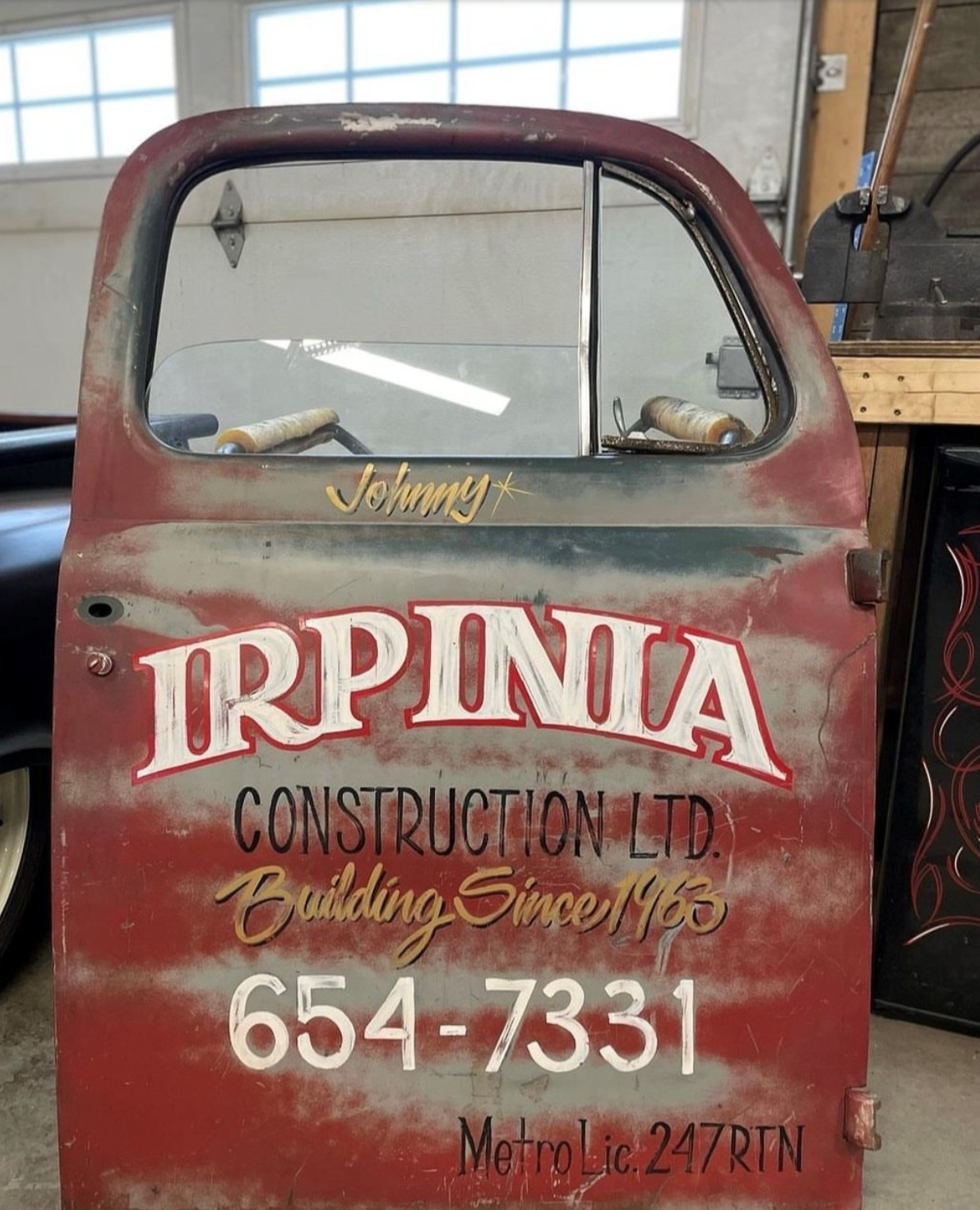
kustom kerb designs
What an amazing cake made by @elegateaucakes be sure to check out their page!!
“I will call this beauty, ‘Chelsea’. A handmade floral creation inspired by the exquisite
@boodles Raindance Chelsea diamond pendant design.
Finished with edible 24ct gold sheets by @wrightsoflymm
and @swarovski crystals for ‘that ‘centrepiece, it surely captures the essence of timeless sophistication.”
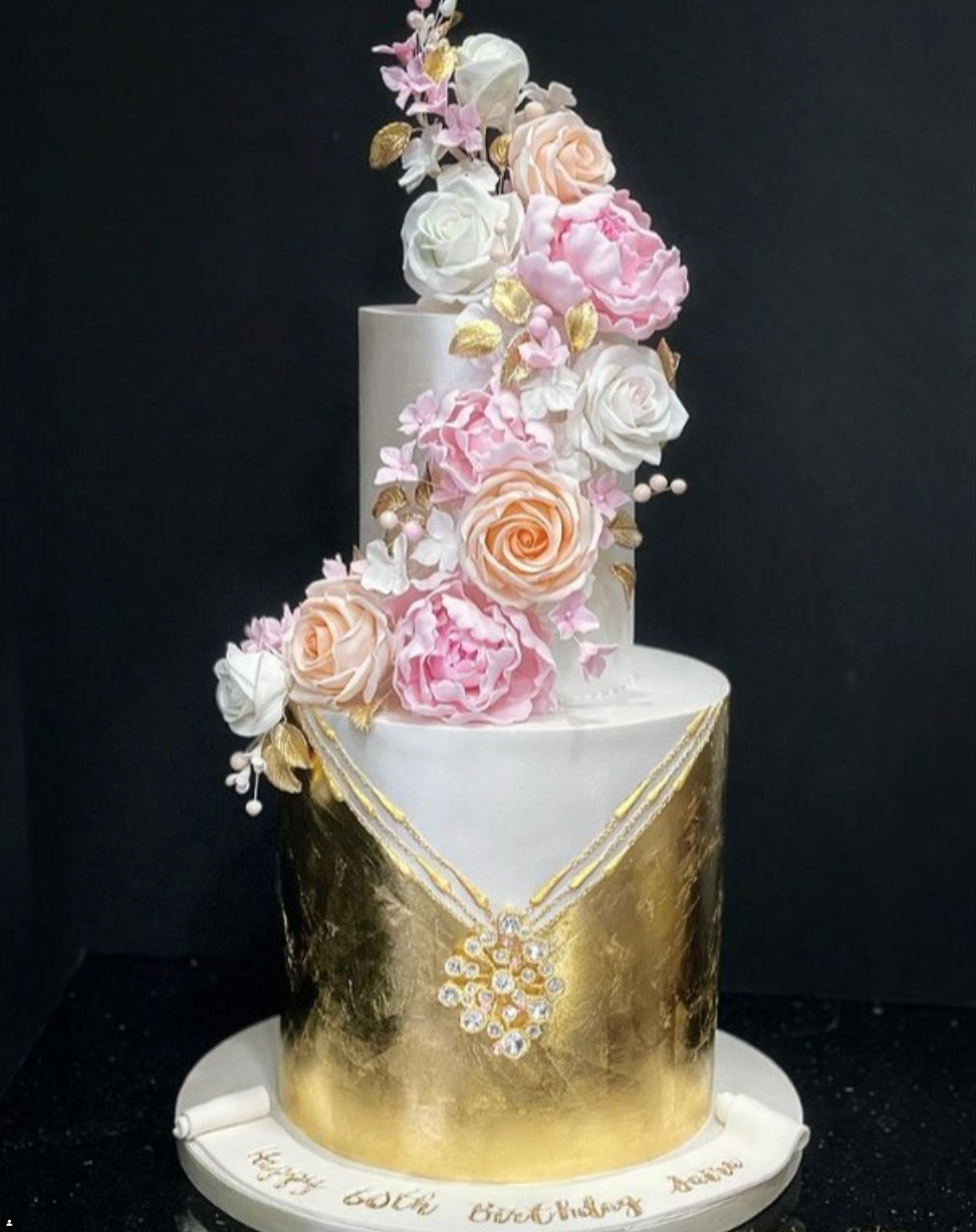
Elegateau Cakes
Amazing work by @nagihanseymour she never fails too impress, the best of the best!! Be sure to check out her page for more of this talented work!!
” Bumblebee 22 ct gold, watercolour and gouache on 300gsm @fabrianoinacquarello watercolour paper.
Watercolour: @danielsmitheurope @danielsmithartistsmaterials
Gold: @wrightsoflymm”
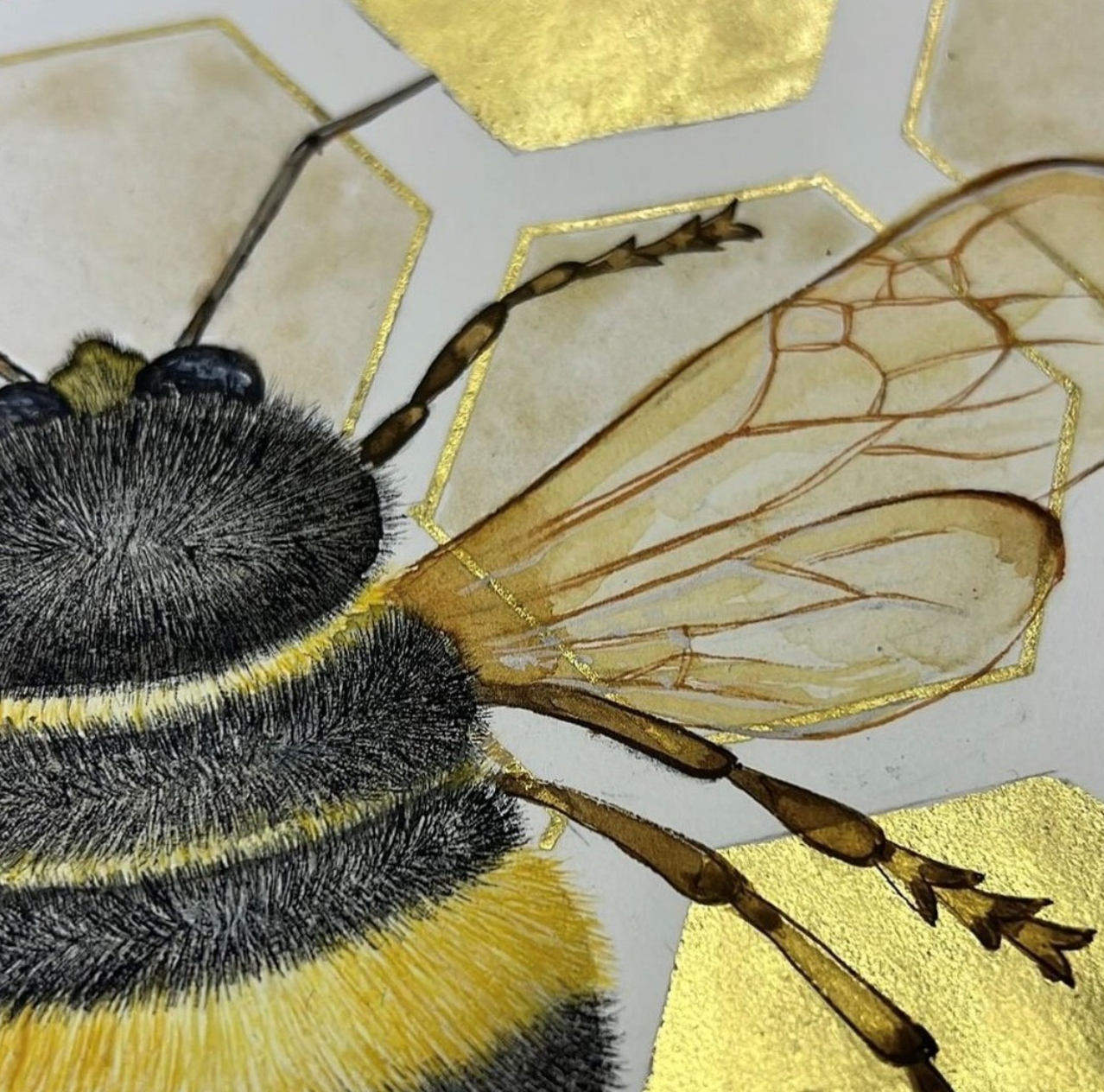
Nagihan Seymour
The tradition of using gold leaf dates back thousands of years. Ancient civilisations such as the Egyptians, Greeks, and Romans were among the first to discover and harness its beauty. Gold leaf was used to adorn temples, palaces, and sacred objects, symbolising wealth, power, and divinity. The Renaissance period also saw a resurgence in the use of gold leaf, as artists like Michelangelo and Leonardo da Vinci incorporated it into their masterpieces, adding a touch of opulence and grandeur.
Gold leaf comes in various forms, each with its own unique characteristics. The most common types include:
Genuine gold leaf: Made from pure gold, genuine gold leaf is highly valued for its richness and lustre. It is available in different karats, with 24-karat gold leaf being the purest and most expensive.
Composition gold leaf: Also known as imitation gold leaf, this type is made by combining copper and zinc with a small amount of pure gold. It offers a more affordable alternative to genuine gold leaf while still providing a similar appearance.
Variegated gold leaf: This type of gold leaf features a combination of different shades, creating a striking and dynamic effect. Variegated gold leaf is often used to add depth and texture to artwork.
Shell gold: Made by grinding gold into a fine powder and mixing it with a binding agent, shell gold is typically used for detailed and intricate work. It can be applied with a brush, creating a smooth and luminous finish.
The creation of gold leaf is a meticulous and intricate process that requires skill and precision. It begins with the beating of gold into incredibly thin sheets, which are then cut into squares and placed between sheets of protective tissue paper. These squares are then further beaten to achieve the desired thickness, resulting in delicate and translucent gold leaf.
Gold leaf has been used in art and design to create stunning and awe-inspiring pieces. It is commonly used in:
Paintings and sculptures: Artists often incorporate gold leaf in their works to add a touch of luxury and brilliance. Gold leaf can be applied to canvas, wood, or even stone, creating a captivating visual effect.
Furniture and decor: Gold leaf is frequently used to enhance the beauty of furniture and home decor pieces. It can be applied to frames, mirrors, vases, and even lighting fixtures, elevating the overall aesthetic and creating a sense of opulence.
Gilding: Gilding is the process of applying gold leaf to surfaces such as metal, wood, or plaster. It is commonly used in architectural details, ornamental designs, and religious artefacts, adding a touch of grandeur and sophistication.
Applying gold leaf requires patience and precision. Here are the basic steps involved:
Prepare the surface: Ensure that the surface is clean and smooth. If needed, apply a layer of adhesive or sizing to create a secure bond for the gold leaf.
Apply the gold leaf: Carefully pick up a sheet of gold leaf using a gilder’s tip or a soft brush. Gently place it onto the surface, allowing it to adhere. Use a soft brush or cotton pad to press down and smooth out the gold leaf.
Seal and protect: Once the gold leaf is applied, it is important to seal and protect it. This can be done by applying a layer of varnish or lacquer, ensuring its longevity and preserving its beauty.
Working with gold leaf can be challenging, but with the right techniques and tools, it can be a rewarding experience. Here are some tips to help you along the way:
Practice on a small surface: Before embarking on a larger project, practice applying gold leaf on a small, inconspicuous area. This will help you become familiar with the process and gain confidence in handling the delicate material.
Use a soft brush: When applying gold leaf, use a soft brush or a gilder’s tip. This will help you handle the delicate sheets without tearing or damaging them.
Work in a clean and controlled environment: Gold leaf is extremely delicate and can be easily affected by dust or drafts. Ensure that your workspace is clean, free from debris, and protected from any air currents.
While gold leaf has a rich historical significance, it continues to be a popular choice in contemporary interior design. Its versatility and ability to add a touch of elegance and glamour make it a sought-after material for designers. Some contemporary uses of gold leaf in interior design include:
Accent walls: Applying gold leaf to a feature wall can create a stunning focal point in a room. The shimmering gold adds depth and texture, instantly transforming the space.
Furniture and accessories: Gold leaf can be applied to furniture pieces, such as coffee tables, chairs, or cabinets, adding a touch of luxury and sophistication. It can also be used on accessories like lamps, picture frames, or decorative objects, elevating their aesthetic appeal.
Ceilings and architectural details: Gold leaf can be used to highlight architectural details, such as mouldings, cornices, or ceiling medallions. It adds a sense of grandeur and elegance to the space, creating a truly captivating environment.
Gold leaf holds great symbolism and cultural significance across various cultures. In many societies, gold represents wealth, prosperity, and divine power. It is often associated with luxury, success, and abundance. Gold leaf is also used in religious and ceremonial contexts, signifying spiritual enlightenment and transcendence.
In conclusion, gold leaf is a remarkable material that has stood the test of time. Its rich history, versatility, and captivating beauty continue to inspire artists, designers, and craftsmen to create extraordinary works of art. Whether it is used in paintings, sculptures, furniture, or interior design, gold leaf adds a touch of opulence and elegance that is truly unmatched. So, let us embrace the golden artistry and explore the endless possibilities that gold leaf offers.
Explore our wide range of gold leaf products and unleash your creativity.